dimarts, 28 de juny del 2016

LESSON PLANS

Lesson plan to Erasmus + project NO 2.

Subject: Why is sour food healthy?

Objectives of the lesson :

  • - familiarizing with the term „fermentation”
  • - pickling and souring as the method of conservation and prolongation of
  • products durability
  • - being aware of the influence of healthy food on the human organism and its
  • functioning
  • - familiarizing with healthy products, their origin, nutritional values
  • - moulding the skill of using the different sources of information
  • – reminding the functioning of digestive system
  • – -fixing the term „recipe”
  • – moulding the skill of arguing
  • - moulding the skill of using the knowledge in practice
  • - moulding the language skill ( in Polish and English languages)


Methods and techniques:

  • - working with the text
  • - problem method
  • - elements of heuresa
  • - discussion
  • - practical exercises


Means and didactic materials:

- crossword
- map
- groceries : cucumber, cabbage, sour milk
- multimedial presentation

Lesson course:

a.i.1. Introduction. Crossword solution. (att. 1.)
a.i.2. Students speak freely about the guessed products – their origin, look,
application ( geography, biology)
a.i.3. Searching for the information and filling in the chart ( IT )


PRODUCT NUTRITIONAL VALUES

MILK
CUCUMBERS
CABBAGE
a.i.4. Mini- lecture of the teacher about these same products but -
pickled. Teacher mentions that long time ago it was a method for
conserving and prolongation of the products durability
a.i.5. Students search for the information about fermentation (chemistry,
biology)
Milk fermentation - fermentation of the cabrohydrates to lactic acid is
carried on because of the activity of bacteria of milk fermentation. This
kind of fermenation is very important at production of many milk
products.

Using mik bacterias in food industry.

In dairy industry ( production of milk, fermentated beverages , milk
and cream, cheese ripening )

in vegetable industry ( souring of cucumbers and cabbage)
a.i.6.

 Teacher discusses with students divided in 3 groups

I gr.- milk
II gr.- cucumbers
III gr.- cabbage

the health properties of soured and pickled products.

Sour milk - healthier form the regular milk, helps in digestion, doesn't
include the glucose, milk bacerias decompose lactose, so it can be eaten
by people with its intolerance, it consists of vitamins A, B2, B12, calcium.

Sour milk – helps in weight losing, prevents in heart diseases and
circulatory system, strenghtens the human organism. It is also used in
cosmetology

Sauerkraut - known in ancient Rome, includes the huge amount of
vitamin C, vitamin B, E, P beta-karoten, calcium, magnesium, ferridium,
potassium, sulfor ( good for nails and hair )
It regulates the temperature of the body, its juice alleviates the caugh,
stimulates the digestion and apetite, helps in curing the liver, spleen,
reumatism, atherosclerosis, cleanses the organism.

Pickled cucumbers - they include 2 times more vitamin C than fresh
cucumbers, also more vitamins B2, B3, B6, B12, E and K. which is
responsible for blood clotting .Eating them helps in regulating the
bacteia flora, stimulates the digestive process, strenghtens the
resistance.

Soured and picled products include antioxidants which act in an
antidepressive and anti- cancer way.
a.i.7. Reminding the form of the instruction - recipe (Polish language)
a.i.8. 

Making the recipe for :
- salad of the sauerkraut or pickled cucumbers
- soup - cabbage or cucubmer soup
- strawberry shake from the sour milk

9. Translating into English - Bon apetit!

CROSSWORD

1. milk sugar
2. man
3. group of micro organisms
4. name of the element with symbol Ca
5. group of organic compounds which are very important to proper
functioning of the organism
6. carrots, cucumbers, parsley are …......................
7. …..................... lifestyle for a hopeful future
8. apples, pears, lemons, oranges are …..................................


Lesson in biology

Subject:
Food & Health

The lesson:
Discussions, questions from the teacher to the students:

1. What is your favourite food?
2. Why do we have to eat?
3. What do we have to eat on a daily basis to have good health?
4. What happens to food after we eat it?
5. What is a good and healthy food?
6. What is the unhealthy diet?

Textbook read and discussed the contents:

Different taste of the food.
The importance of a varied diet.
The importance of balanced meals.
A lot of exercise means we need have to energy

Textbook read and students learn about the main nutrients in food :
Protein, carbohydrates, fat, vitamins and minerals.

Students learn about the importance of each nutrient in the food and where they are mostly found.


6
7

8

diumenge, 26 de juny del 2016

TRIP TO ITALY

MEMORIES WRITTEN BY THE STUDENTS AFTER THE VISIT TO ITALY


Polish Students memories from Naples

Trip to Naples was one of the best experience in my life. All of us met such great and nice people. First day was very difficult and hard because we had to spend all day with our new families without our friends. But it wasn’t so scary like we thought. For the whole days we were together. Not only with friends from Poland but with from other countries too. We were spending all days together talking (in English of course), laughing, playing and just enjoying the time. The worst moment came when we had to say goodbye to Naples, Italy and our new friends who are part of us now. We feel like a big family. Hardly everyone was crying because we became someone important for us. We hope we’ll meet again soon!  
Agnieszka Makowska

A trip to Italy I'll remember very well. It is amazing how you can miss people from other country after one week. Everyone who took part in project was very friendly and had positive attitude. In Italy I really liked every place we were, such as Pompei or Amalfi. Of course, we tried traditional Italian food, which was amazing. I love that dinners in Italy consists of a lot of dishes. I liked also living with one of participant of Erasmus+ project and his family. This way I could experience differences between how people live everyday in Italy and in Poland. From this trip I learned a lot of things, such as some words in a lot of languages. I also improved my fluency in speaking English. 
Kordian Dębiec


I spent the beginning of April with fantastic people from Naples  and peolpe  from Erasmus project... Everyone was amazing. In my opinion every day was different and exciting but I will never forget the last day when everybody  met together in "VILLA MINIERI " it was the last day of our stay in Italy . We became real friends  and realized that this is the end of this incredible adventure...
Maja Stogowska


 I couldn't wait for this trip to Naples, Italy, to meet with people from other countries. The journey was a bit tiring, as we had got up at 3 AM, flew to Munich and then to Naples, but it was worth it. It is always great experience to know new people, but this one was the greatest. Everyone was very friendly, we had fun while spending time with each other. Another fantastic thing about this trip was visiting such beautiful places like Amalfi, Pompei, Sarno and an old city as Naples. We ate a lot of Napolitan dishes such as Gnochi, Neapolitan pizza, mozzarella, ice cream and many others. For me, it was the best trip I have ever been to and I hope that we will meet each other again.
                                                                                                 Martyna Chmielecka


Trip to Naples was an amazing experience. I was afraid that I won’t get along with family I was going to live but they turned out to be nice and friendly. In Italy, people were great and I miss all of them. They took us for pizza and ice cream and then to restaurant. We saw how people are living in Italy. Italians eat big amounts of food and for me it was too much. I visited the beautiful places such as Pompeii and Amalfi. My ability to use the English language increased due to conversations with people from other countries. The most difficult thing was to leave all those people and places. I hope they will visit us in Poland soon!
Julia Karpiusz


MEMORIES FROM AUSTRIA

On Tuesday the 5th, April we started our trip to Naples. At first we met us at the railroad station in ´´Wels´´ to ´´Salzburg´´. When we arrived ´´Salzburg´´ we took a bus to ´´München´´ to the airport. The flight was good and soon we arrived Naples. We were already eagerly awaited at the airport in Italy. I stayed at a boy called Christian. He, his best friend, his mother and his brother took me to Chris (Christian) home. On the first day they show me a little bit from Afrangola. But soon we went home and go to sleep. 
On Wednesday the 6th, April we went to the school where we got presented a lecture. After the lecture we got a great big meal. When we finished we make groups. The first group were playing volleyball and the second group were programming an internet page about healthy lifestyle. Later we could still enjoy the evening with his friends and his family. 
On Thursday the 7th, April we took two buses to Amalfi and then to Pompeii. It was funny because one bus do not work. The second door was open and when the bus driver closed the door and drive ten meters on the door were just opened we all laugh.
Amalfi: It is one of the most beautiful places that i have ever seen.
Pompeii: Is a very big and a great old ´´town´´ and it was very interesting but the leader guide was very funny he did not speak English and he did not speak Italian. He speaks a mix of these two languages and nobody understands him.
After some children (Chris and I also) went to a pizzeria without the teachers.
On Friday the 8th, April we visit a seed factory this was cool to see how the tomato comes in cans and in glasses and after we tasted them. They tasted sweet and good. Later we eat at the country club… OH MY GOD THERE WAS SO MUCH FOOD!!!!! But it was so good.
After we drive to a workshop to the Villa Minieri hotel and baking ecological cookies. 
On Saturday the 9th, April we drive to the beach to make sports there. We made a volleyball und football match. Unfortunately Austria lost in all two games. And some kids went into the sea but for me it was to cold. In the evening we were free Chris and I met us with his friends and other young people from the project in the ice cream bar it is called ´´ La Schmetta´´. It was the best ice cream i have ever eaten (*o*). 
On Sunday the 10th, April we visit the town Naples. We looked at the old churches, they were beautiful but I personally found the alleys more beautiful. After this trip we made us beautiful because all from the project met us the last time and in this evening we have to say goodbye. We drive with the bus to the hotel Villa Minieri and eat like kings it was so beautiful there. After the dinner we all went into the disco next to the dinner room. 

Later when we arrived the school it was a very sad moment because we have to say goodbye. So much people were crying also the boys and it was strange because we know that we all see us not anymore again. 
The last night at Chris place was great we all have so much fun and went late into the bed.
On Monday the 11th, April was a sad day it was the last day in Naples. Chris and I cried and then we went to the check in. We flied back to ´´München´´ and took the next train to ´´Passau´´ and someone took us from ´´Passau´´ to our school home. 

This week was the best trip in my life, I hope I will see the the Italian people once again. 
 Thank you for this wonderful project!!


MEMORY OF THE FIRST MOBILITY WITH STUDENTS
ERASMUS PLUS:                                                               by CATALONIA


HEALTHY LIFESTYLE FOR A  HOPEFUL FUTURE


ITALY, April 5th - 11th 2016 

Participant Countries:
-Iceland
-Poland
-Sweden
-Italy
-Austria
-Catalonia


ACTIVITIES:

  1. Activities related to the main topic Healthy Lifestyle:

WORKSHOPS

Some workshops were organized for the students:

  1. Mediterranean Croutons: the students had to prepare the croutons at school, but some teachers did this, so this activity was a taste of such a good dish.  


  1. Ecological cookies: students were taken to a hotel kitchen where they could prepare the delicious cookies, they leant a new way to prepare such a common snack.


WORKING SESSIONS:

There was a teachers’ working sessions when many ideas could be shared and many decisions taken. The meeting was really worth and necessary.

There was also a students’ working session so as to  organize the booklet about nutrition, and 
although not all the students could attend (as there was another activity going on), students could share some of the experiences and activities they had been doing in their own schools. 


SEMINARS

  1. Mediterranean cooking: During the welcome ceremony, we were given a talk on mediterranean cooking: the typical products in the area, how they use them, and about the importance of such products


  1. Healthy nutrition: a nutritionist gave us a talk about the importance of a balanced diet, also during the welcome ceremony.


  1. Mediterranean food seminar: the talk in the seeds factory consisted of giving us information about the factory itself and how they process the seeds.  There was also a visit to a barn where tomatoes are processed during the tomatoes season.


 Visiting how the seeds are processed


                                                                                                        Tasting tomato sauce on toasts


OTHER ACTIVITIES :

SPORT ACTIVITIES. We all went to the  beach where students could practice different sports: 
volleyball, tennis, football and some dancing.


This was a good experience for all, as they                            
could share some unforgetable moments and

could get to know each other a little better.


VISIT TO AMALFI 

We all went to Amalfi where we spent an hour. We could also see the coast and villages on the way.   
All of us could visit the fantastic village and have a walk along the nice narrow streets. Moreover, the way along the coast offered us spectacular sights.


VISIT TO POMPEI

We could see the town which was covered by lava so many years ago. We could understand and see how the village was and learn about this fantastic place.

The guide gave us a good explanation about the history of the place.


VISIT TO OLD TOWN  IN NAPLES

There was a guide who showed us some of the churches in the Old Town in Naples and some of the main streets.   
We had a good taste of the city, students enjoyed the day and the experience. 


ACCOMODATION

Students: the students visiting Italy were saying at Italian students’ houses and their families. The families were really caring and our students were absolutely thankful for this, this was one of the best experiences for them.

Teachers: stayed at Villa Minieri, a really nice and comfortable place to stay, great.


These are some of the photographs at the airport. All of them sad to separate, all of them happy to have had the opportunity to meet.


dijous, 26 de maig del 2016

VISIT TO A WELL KNOWN CATALAN FOOD INDUSTRY : ÀREA DE GUISONA


The students visited this industry which provides meat and other related products all over the country.
The students could eat at their restaurant after the visit and cook their own meat.


dimecres, 27 d’abril del 2016

COOKING WORKSHOP ON BEANS


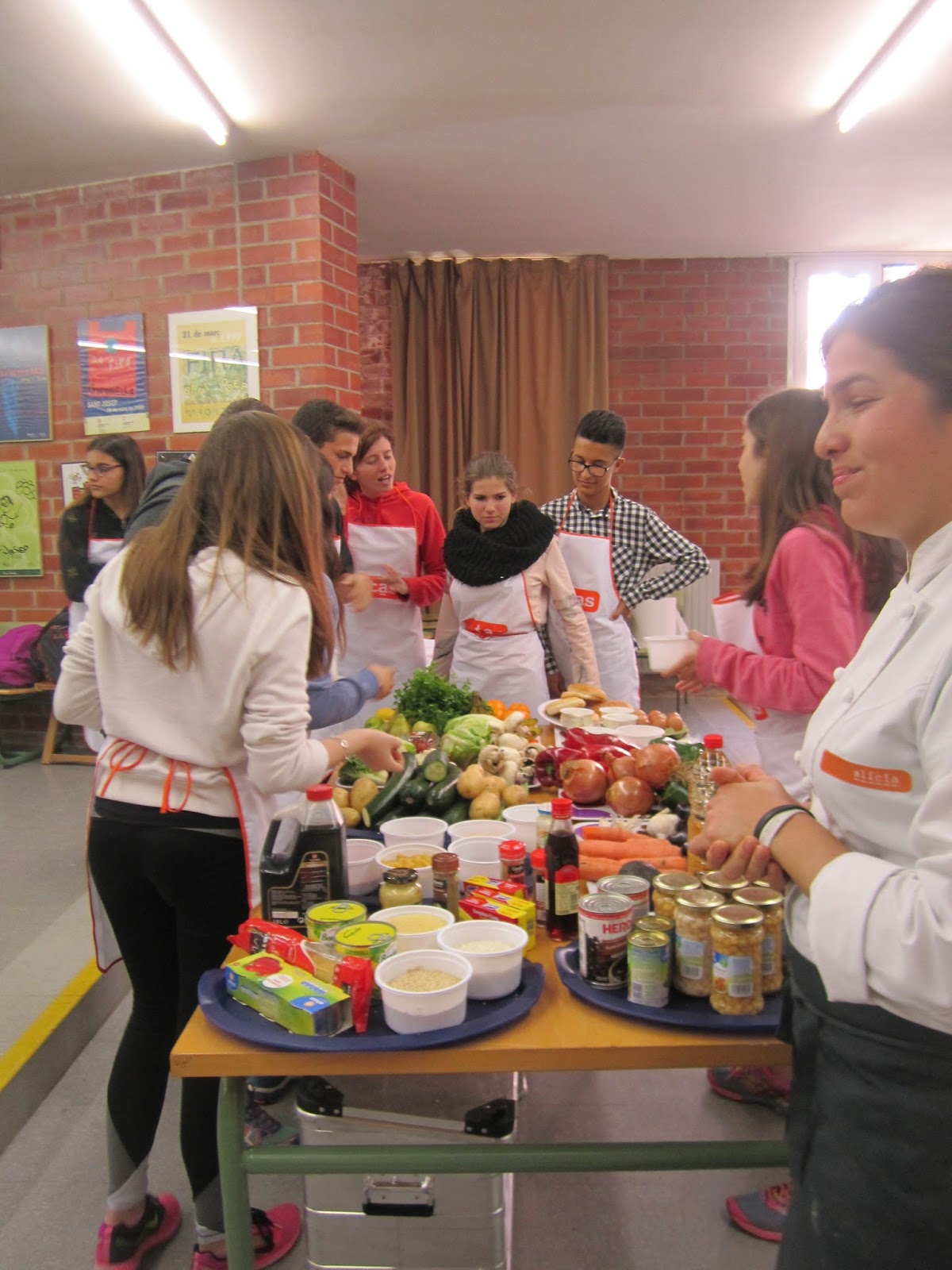
As this year is the international year of beans, some cooks and dietists from FUNDACIÓ ALICIA came to school to show and teach students how to cook beans in a healthy way. 
Students were taught how to prepare peas pate, falafel, lentils hamburguer and white beans salad.

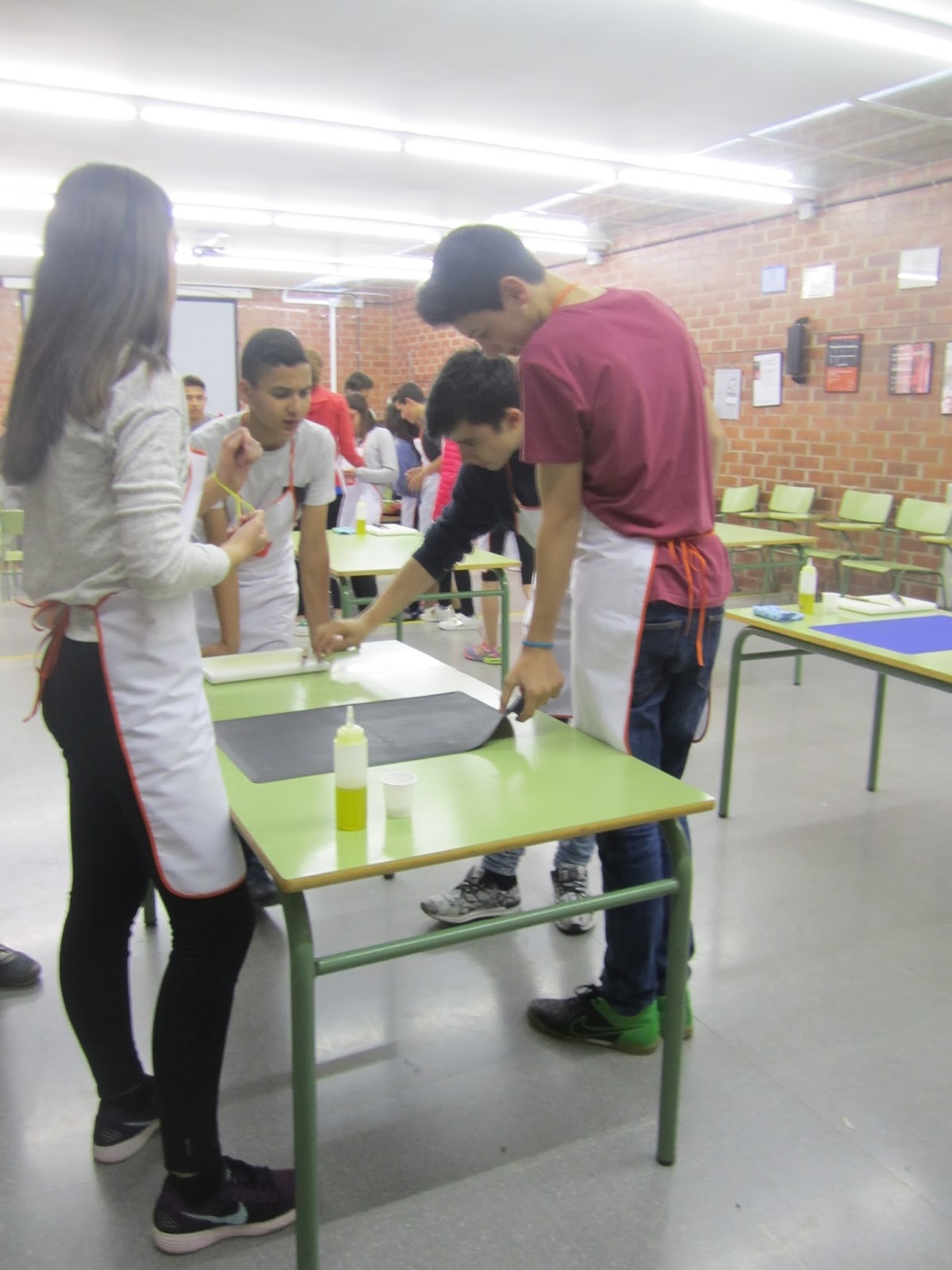
After this master class, students were organised in groups and each group had to prepare a new recipe considering the nutritious values that had been taught, so the activity became a workshop and it was really practical.


THE IMPORTANCE OF BEANS

ONU has declared the year 2016 “The international year of beans”, and this was our starting point for the Beans Workshop that our students could do in IES Pere Fontdevila.

Main topics:

  1. Kinds of beans and their characteristics
  2. Nutrition value of beans
  3. Effects on our body
  4. Ways to cook beans
  5. Some recommendations
  6. Recipes and taste

  1. Kinds of beans and their characteristics

Beans are of vegetal origin with a high amount of proteins, reason why they are sometimes called “the meat of the poor”. The most common eaten beans in Catalonia are chickpeas, white beans and lentils. The second group are peas and FAVES.  Another bean which has recently been introduced in Catalonia has been soya.


pastedGraphic.png
  1. Nutritional value of beans


Proteins

Beans are a good source of vegetal proteins (18-35%). Soya beans are the beans with the highest amount of proteins. The fact that these lack some amino acids makes that this protein has a lower biological value than meat, fish or eggs. We can increase the biological value of this protein by mixing beans with cereals (rice) as this contains the amino acids that beans lack.


Carbohydrates

Beans are rich in complex carbohydrates, and some examples are bread, potato, cereals… (100 g. aliment - 50% CH)

Fibre

They are rich in fibre, so they provide high quantity of both soluble and insoluble fibre. This helps in the gastrointestinal function. Otherwise, a main problem is that they produce gasses, therefore, a way to improve this is to eat them smashed or as a puree. Another solution is to eat a yogurt for desert, which helps digestion.

Fats

Low proportion of fats. Some of them are in-saturate fats, which are good for our organism, in contrast to the saturate fats of meat.

Vitamines

Beans provide vitamines B ( B1, B2, B3), the same as animal food. they also provide vitamine B9. They don’t have B12, vitamine E.

Minerals
Good source of iron , (no hemo), which means that its absorption is low. Rich in potassium, magnesium, zinc, phosphorus and low in sodium.

pastedGraphic_1.png


  1. Efects on the body
  • The usual income of beans can reduce risc of some cancers
  • They can help when losing weigh.
  • They help to regulate the blood pressure and the cholesterol levels and sugar in the blood. 
  • They are a help in the prevention of heart diseases, diabetes, high blood pressure and inflammation.


  1. Ways to cook beans:

 Beans can easily be combined with many other ingredients: with cereals, fish, vegetables, and then we can a good balance of nutrients. Beans, as well as rice and vegetables, belong to a group of aliment which should be eaten daily so as to have a balanced diet. If we eat one of these for lunch, another of the same group should be eaten for dinner.


How can we eat beans?
  • With vegetables, boiled with some olive oil, with garlic and parsley, with some ham,…
  • In a salad: previously cooked, cold and seasoned with olive oil and mixed with other ingredients for a salad.
  • As a puree: Previoulsy cooked, and then crushed, with or without vegetables. 
  • Cooked with meat or fish.
  • In an omelette.
  • With vegetables: with spinach, with broccoli, etc…
  • Hummus: puree made with cooked chickpeas. This is typical from other cultures (Morocco,…)
  • Soya: this can be found as a drink, as sprouts, tofu, souces, in powder, … For the high levels of isoflavones, this is highly antioxidant.,

  1. Tips 


pastedGraphic_2.png 


6. Recipes and taste


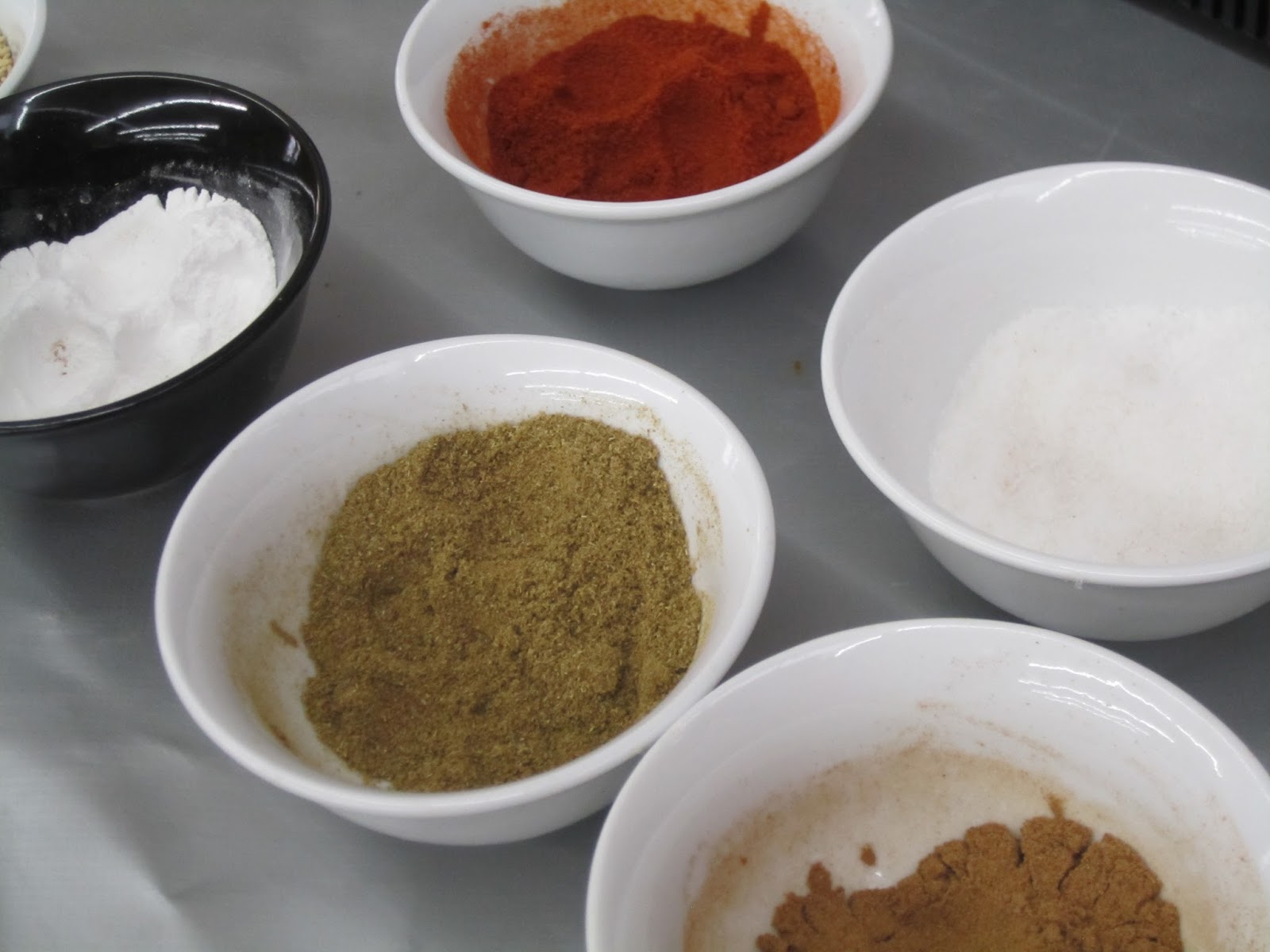
Our students participated in a seminar and workshop about beans. The expert, a nutritionist of The Fundació Alícia, explained the importance of beans in our diet, prepared 4 different dishes with beans so students could see how to do it, and then they could taste the dishes. 
After this, students could work in groups and designed their own dishes, making some changes to the recipes learnt, and cooked and ate them. They enjoyed the experience, the smell and the taste!!!


Recipes:

PEAS PATEE 

Ingredients: (serving 4 people)
  • 80 gr of peas ( in a jar)
  • ½  avocado
  • 20 gr. Yogurt
  • ½  lemon juice
  • Salt and pepper
  • Toasts


Preparation:
  1. Put the peas in a sieve and water them well
  2. Prepare a mixture with a fork of the peas and the rest of the ingredients until you get a fine dough.
  3. Spread on toasts.


FALAFEL


Ingredients: (serving 2 people)
  • 50 gr of cooked chickpeas
  • 30 gr chickpeas flour
  • 20 ml  water
  • 20 gr of onion
  • ½ garlic clove
  • 1 tbs coriandre
  • ½ tsp sweet red pepper
  • ½ tsp baking powder
  • 1 tbs virgin olive oil
For the sauce:
  • 1 yogurt
  • 1 lemon
  • Salt and pepper
Preparation:
  1. Wash and finely cut the onion, garlic and coriander. Keep aside.
  2. Wash and sieve the chickpeas, smashed them with a fork. Add flour and water and mix until you get a fine dough.
  3. Add the rest of the ingredients, mix and add salt and pepper.
  4. Shape the falafels by using 2 spoons, fry in hot oil in a frying pan until brown.
  5. Put the hot falafels on a piece of absorbing paper.
  6. Serve hot with a sauce made with the yogurt, lemon juice, salt and pepper.


LENTILS HAMBURGUERS 

Ingredients: ( for 2 hamburguers)
  • 100 gr carrots
  • 100 gr cooked lentils
  • ½ onion
  • 1 yolk
  • 1tbs of wholemeal flour
  • ½ garlic clove
  • Virgin olive oil
  • Salt
  • Pepper
  • Curry powder
To go with:
  • Round bread for hamburgers
  • Tomato, lettuce and onion

Preparation
  1. Wash the vegetables, grind the carrots and finely cut the garlic and the onion.
  2. Fry the vegetables in a frying pan with a little oil.
  3. Wash and sieve the cooked lentils and smash until you get a puree.
  4. Add the lentils to the frying pan and mix with the the vegetables. Also add  the flour and fry for some minutes. Keep stirring in the meantime  and put aside.
  5. Add the yolk and curry powder to the mixture, also the salt and pepper (to your taste)
  6. Shape the hamburgers on a plate with a fork or spoon, fry on a frying pan with just a little olive oil.
  7. Put the hamburger into the bread or on a plate, that’s up to you. Add lettuce, tomato and onion next to the hamburger.


7. Conclusions of the importance of eating beans


  • Beans are very nutritious, proteins with a high biological level.
  • They are cheap. 
  • They are very versatile, easy to combine. very recommended to be mixed with cereals. 
  • Beans are present in every culture. 
  • We should substitute meat by beans: 2-4 times a week are recommended.


PEAS PATÉ:


FALAFELS:
BEANS SALAD:

LENTILS HAMBURGER


LET'S COOK:


THE RESULTS: